


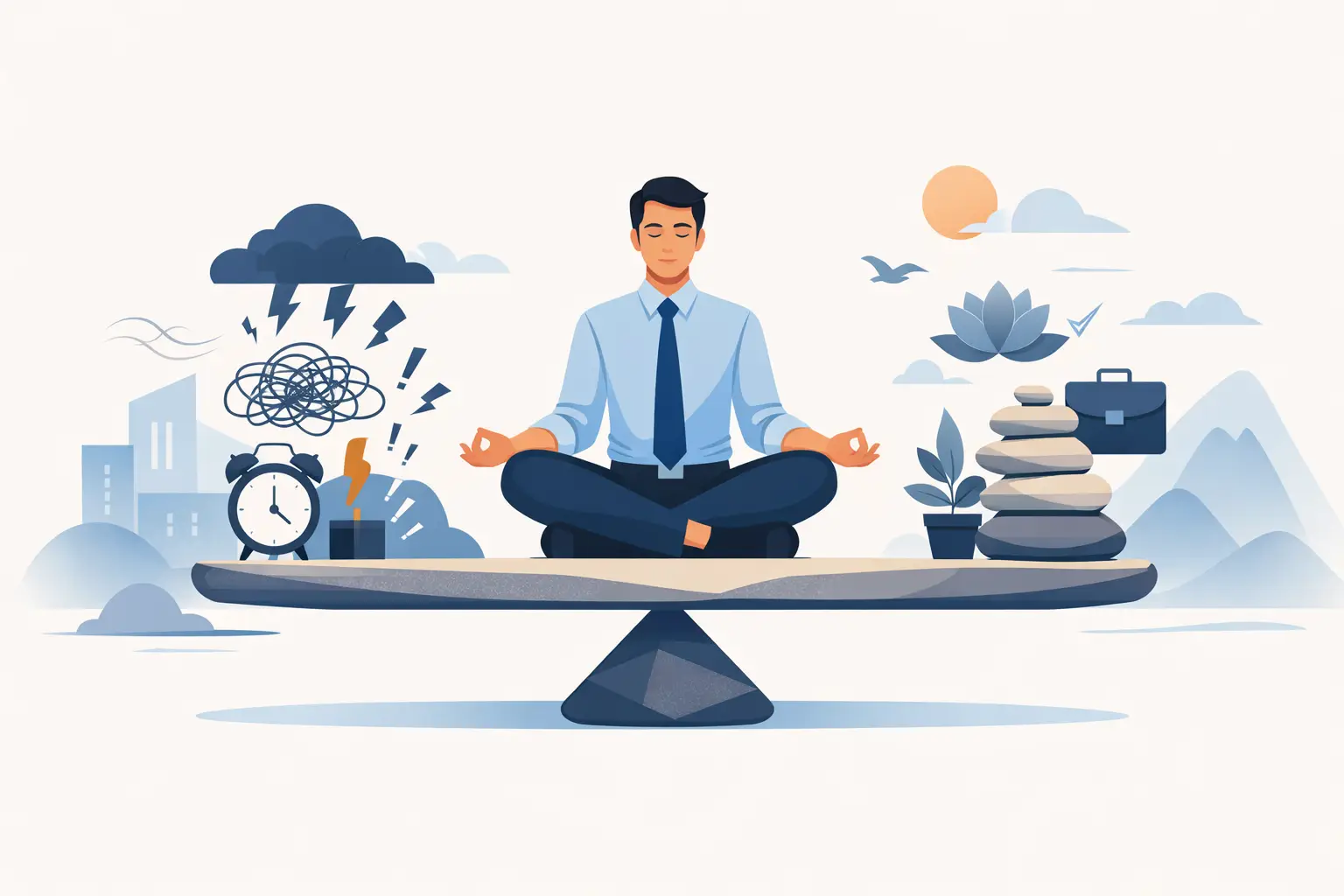
How can I regain my balance after anxiety?
There's a moment many of us know all too well: the anxiety attack ends, the pulse slows a little, but you're never the same. A slight unease remains, a tightness in your chest, or a feeling that you've just emerged from a battle no one understands. At that moment, the question becomes clear: how do I regain my composure after anxiety, not just how do I stop it?
This is a mature question, because restoring balance is not the same as silencing the symptoms. Sometimes the mind calms down while the body remains alert. Sometimes the disturbing thoughts cease, but you feel a heaviness, emptiness, or a desire to withdraw from people. Therefore, dealing with post-anxiety symptoms requires kindness and honesty, not haste or harshness.
Why can't I regain my balance immediately after anxiety?
Because anxiety doesn't just pass through thoughts. It passes through the entire nervous system. When your body senses danger—whether the danger is real, imagined, or linked to a past memory—it begins to mobilize energy for protection. Breathing quickens, muscles tense, attention narrows, and thinking becomes sharper and less flexible.
After the wave subsides, the body doesn't automatically return to a state of security. It needs clear signals telling it: the threat is over. This is where many people make a common mistake. They berate themselves for still feeling confused, or they try to jump straight into productivity as if nothing happened. The result is that the tension remains lurking in the background.
Anxiety, in many cases, is not a character flaw, a weakness of faith, or a failure of discipline. It may be a protective response the body has learned through years of stress, fear, overexertion, or repeated minor traumas that were not given space to be understood and addressed.
How can I effectively regain my balance after anxiety?
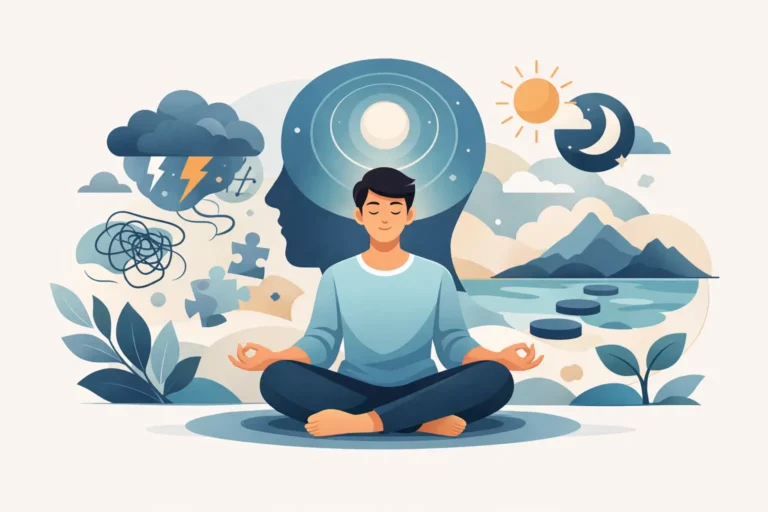
Start with a simple idea: Balance returns when the body feels safe, when the mind understands what is happening to it, and when you stop treating yourself as if you are the problem.
The first thing you need after anxiety is to slow down. Not give up, but a deliberate slowing down. If you try to force yourself back to normal too quickly, you may increase your inner pressure. Sit down. Put your feet on the ground. Notice what you see around you. Silently name things if you need to. This step may seem small, but it brings your attention back from the burning inside to the present reality.
Then pay attention to your breathing, but without forcing it. Some people are bothered by instructions to breathe deeply because it makes them feel more suffocated. This is understandable. It's often best to start with an exhale that's slightly longer than the inhale, or simply observe your breathing until it eases naturally. The point isn't to breathe perfectly, but to send your body a calming message: you don't have to fight right now.
Next, ask yourself a different question. Instead of, “What’s wrong with me?” try, “What was this anxiety trying to protect me from?” Sometimes the question reveals a fear of failure, rejection, loss of control, or confronting pain that predates the current situation. This doesn’t mean that every anxiety has a grand story, but much of it isn’t as random as we think.
What does my body need after anxiety?
It often needs to be released, not repressed. When tension rises in the nervous system, pent-up energy accumulates in the muscles, mind, and attention. If this energy remains trapped, the discomfort persists even after the episode has subsided.
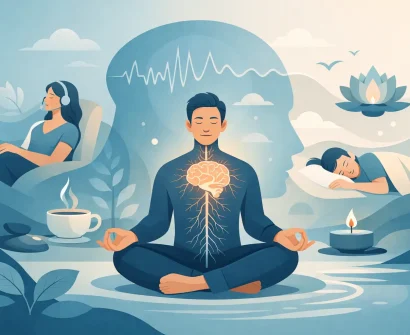
A slow walk, arm and shoulder movements, simple stretching, or lying down with one hand on your chest and the other on your stomach may help. Some people regain their balance through mild, natural body tremors, crying, yawning, or the urge to sleep. These are not always signs of weakness; sometimes they are signs of regulation.
The important thing here is to distinguish between calming down and numbing yourself. Calming down brings you back to yourself. Numbing yourself cuts you off. Scrolling through your phone for hours, overeating, or burying yourself in work might provide temporary relief, but it doesn't restore true balance. Sometimes we need a brief distraction, yes, but if it becomes the only response, the root cause remains unchanged.
How do I deal with thoughts after an anxiety attack?
Post-anxiety can be mentally tough. You start reviewing what happened: Why did I break down? Did people notice? Am I getting worse? Will I stay like this? This kind of thinking fuels the next wave.
The key here isn't to convince yourself that everything is fine when you don't feel that way. It's better to use more honest and balanced language. For example: "I had a very anxious moment, and it was exhausting. But what I'm feeling now can subside." Or: "My body is on high alert, but there isn't necessarily any actual danger." These statements neither deny nor exaggerate the experience.
If you tend to push yourself too hard, you might need to listen to your inner critic. Many people spend years accomplishing things despite exhaustion and enduring pressure, only to collapse when their bodies tell them to stop. Anxiety isn't just an enemy here; sometimes it's a warning sign that your lifestyle itself needs re-evaluation.
When is self-management alone not enough?
If anxiety becomes frequent, or starts affecting your sleep, relationships, and work, or if you find yourself avoiding many situations for fear of experiencing the same feelings, then professional support is not a luxury. This is especially true if anxiety is accompanied by painful memories, emotional numbness, panic attacks, or a chronic feeling of being disconnected from yourself.
Deep work focuses not only on alleviating symptoms, but also on understanding the patterns that reproduce them. In trauma-aware therapeutic spaces, the person is not only asked: What are you thinking? But also: How does your body feel? What is triggering this fear? And what internal parts have been carrying the burden of protection for so long? This kind of understanding transforms the relationship with anxiety from a struggle to a structured and safe listening process.
How can I regain my balance after experiencing long-term anxiety?
True recovery doesn't happen in a single moment. It's built through small, repeated practices that teach your nervous system that safety is possible, and that you don't have to live in a constant state of readiness.
One of the most important transformations is to reassess your life rhythm. Is your schedule so packed that your body doesn't have a chance to regulate itself? Are there relationships that constantly drain you? Have you become so accustomed to ignoring your inner signals that you only hear them when they scream? These questions aren't theoretical. Much anxiety is indeed linked to a lifestyle that leaves no room for introspection.
You might also need to establish simple rituals after tough days: soft lighting, fewer stimulants, a quick jot-down of how you're feeling, or an honest conversation with a trusted person. The point isn't to create a perfect routine, but to give yourself frequent reminders that you're not alone with what's going on inside you.
If you're a high performer, the hardest part might be accepting that you need to slow down intentionally. But the truth is, strength isn't about maintaining a facade of strength at all costs. Strength is about recognizing the moment of disconnection before it escalates, and consciously returning to yourself instead of pushing yourself to the brink of collapse.
What is the difference between transient anxiety and anxiety linked to deeper roots?
Transient anxiety is often linked to a specific stressor and then subsides once the situation passes. However, when the same feeling recurs in different situations, appears for no apparent reason, or seems larger than the current event, there is often a deeper layer that needs attention. Its roots may be connected to past experiences, a history of chronic stress, or internal parts of the body that have long been on edge.
This doesn't mean that everyone who experiences anxiety is suffering from a major trauma, but it does mean that superficial solutions aren't always the right place to address the issue. This is why many people tire of quick fixes; they offer temporary relief, but then everything goes back to the way it was. When the root cause is understood, the process becomes more genuine and stable.
In trauma-sensitive work that combines psychological understanding with physical organization, such as some of the approaches offered by Montaser Moussa, the question becomes deeper than simply "How can I calm down now?" It becomes: "How can I live from a place of greater security, inner leadership, and connection with myself?" This is the difference between soothing and transformation.
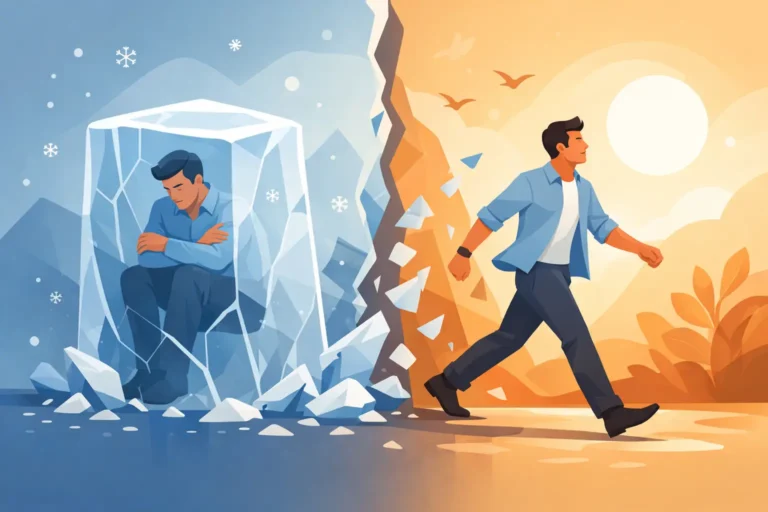
If you emerge from today's anxiety feeling unsettled, don't see it as a failure. See it as a message. Your body isn't defying you; it's trying to guide you to something you can no longer ignore. Start with a small, gentle, and honest step. Returning to balance doesn't require hardship; it requires learning to return to it with greater confidence each time.