



What exactly is conscious trauma recovery?
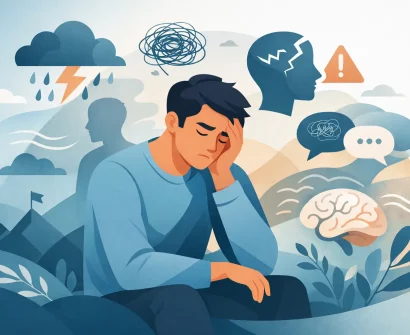
Your life may appear orderly from the outside, while inside there's a constant, relentless tension. You accomplish things, you endure, you smile, then return to a long night of exhausting thoughts, stress, or a feeling of not being fully present in your life. This raises a crucial question: What is conscious trauma recovery, and why do many feel it's closer to reality than quick fixes or superficial self-improvement attempts?
Conscious trauma recovery is not a new psychological slogan, nor is it simply an understanding that the past has affected you. It is a completely different way of looking at symptoms, behaviors, and inner pain. In this approach, anxiety, emotional detachment, self-criticism, and breakdowns are not treated as signs of weakness or character flaws. Rather, they are often understood as intelligent adaptive responses learned by the nervous system in situations that were not entirely safe.
This difference changes everything. When you stop asking yourself, “What’s wrong with me?” and start asking a more honest question, “What happened to me? What have my body and mind learned to stay safe?” a different door begins to open. Not the door of denial, nor of justification, but the door of deep understanding that paves the way for real change.
What is conscious trauma recovery?
Simply put, it's a healing process that places trauma and its effects at the center of understanding, without confining the individual within its identity. The word "conscious" is crucial here. The aim isn't merely to recover from the trauma, but to heal in a conscious, gradual way that respects the boundaries of both body and mind. In other words, we don't pressure the individual to "get over it" quickly, nor do we demand that they recover everything at once, nor do we reduce their healing to a positive idea or a productive routine.
Conscious trauma recovery stems from the fact that many of our current patterns aren't random. Perhaps you have difficulty trusting, you're overly eager to please others, you freeze up when confronted, or you exhaust yourself striving for perfection. These patterns may seem troubling today, but they often arose as coping mechanisms, not as character flaws.
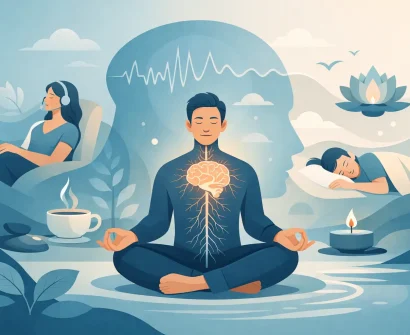
Therefore, this type of recovery doesn't begin by trying to forcibly break these patterns. It begins by building the necessary security to understand them. Then, work is done on regulating the nervous system, expanding the capacity to feel without being overwhelmed, understanding the conflicting inner parts, and connecting physical, emotional, and cognitive experience. Here, healing becomes more than an idea; it becomes a new inner experience.
Why is mental awareness alone not enough?
Many people know their story all too well. They may have read a lot, undergone previous therapy or training, or developed a precise vocabulary to describe anxiety, attachment, escape, or trauma. Yet, they still feel that something inside hasn't truly shifted.
The reason is that mental understanding alone doesn't always reach the place where the response is stored. Trauma doesn't just reside in thoughts. It can manifest as muscle tension, hypervigilance, emotional numbness, difficulty sleeping, sudden outbursts, or a chronic feeling of being under unseen threat. Therefore, conscious trauma recovery involves not only reinterpreting the past but also understanding how the past is present in the body and the present moment.
This doesn't mean all pain is trauma, nor that everyone needs the same path. There are differences between those who have experienced clear and violent events and those whose suffering has been shaped by years of emotional neglect, criticism, or insecurity. But in both cases, the principle remains the same: what we don't feel safe enough to approach cannot be healed.
How does conscious trauma recovery differ from traditional self-development?
Traditional self-development often asks: How to become more disciplined, more confident, more accomplished? Conscious trauma recovery, on the other hand, asks first: What makes discipline so stressful in the first place? Why does closeness seem frightening? Why does accomplishment sometimes turn into an unconscious attempt to escape a feeling of inadequacy?
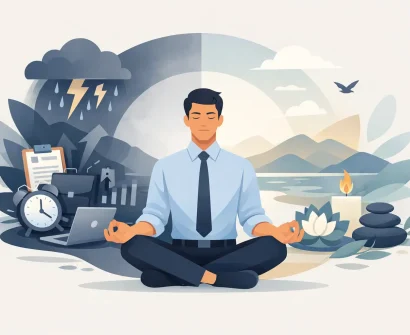
This isn't a rejection of practical change; it's a correction of the starting point. Because when you try to build a stable life on top of a strained nervous system, old patterns often resurface in new forms. You might succeed professionally but crumble in your relationships. Or master meditation but still live with underlying inner tension. Or motivate yourself every day, but don't know why you feel empty when the noise subsides.
Conscious trauma healing addresses the root cause. This sometimes makes it slower than quick fixes, but it's more honest and sustainable. Yes, the path may be non-linear. You may sometimes feel like you're moving forward and then backward. But this is a natural part of a profound process that respects the complexity of the human psyche.
Signs that may indicate you need this type of recovery
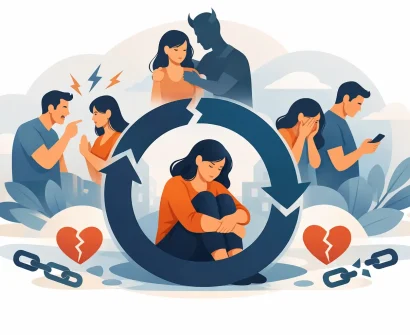
You don't need a diagnosis, nor do you need to have experienced a significant traumatic event, to benefit from this approach. Sometimes the signs are more subtle but incredibly painful. For example, you might feel constantly on edge even during quiet times, feel guilty when you're relaxing, find yourself repeating the same relationships despite your awareness, or experience an internal conflict between a part of you that desires closeness and another that avoids it.
This can manifest as high performance: a successful, responsible, and conscientious individual who doesn't know how to relax. They accomplish a great deal but feel insecure. They hear praise but don't believe it. They experience endless internal conflicts. These situations don't necessarily indicate complex trauma, but they often suggest that the nervous system has learned that survival is contingent on alertness, control, or gratification.
What does the path to conscious trauma recovery involve?
There's no one-size-fits-all approach, and that's a crucial point. But there are essential elements that recur in healthy paths. The first is building security. Not perfect security, but enough stability to allow you to observe what's happening within yourself without collapsing or becoming completely disconnected.
Next comes learning regulation, not repression. The difference is significant. Repression is silencing your body and emotions to appear okay. Regulation, on the other hand, is developing a genuine capacity to be present with what you feel to a tolerable degree. Here, the tools of the body—mindfulness, breathing, and noticing internal cues—become invaluable, if used consciously and not as a means to quickly overcome pain.
Then another important aspect emerges: working with our inner selves. Many of us experience a confusing internal conflict. One part wants to trust, while another refuses. One part craves comfort, while another attacks with blame. When we understand these internal parts as protective forces, not as enemies, the internal dynamic shifts from war to a more compassionate and transparent leadership.
In some approaches, well-known and trauma-informed methods are utilized, such as working with the nervous system, Internal Family Systems, NARM, Compassionate Inquiry, or techniques for releasing stored tension in the body. What matters is not just the name of the tool, but how it is used, whether within a safe relationship, and at a pace that respects the individual's capacity to cope.
What does this approach not mean?
It doesn't mean you have to dwell on the past forever. It doesn't mean every challenge in your life stems from trauma. And it doesn't mean personal responsibility is absolved. On the contrary, this approach helps you take responsibility from a more mature and less harsh place. You are not to blame for what shaped you, but you are invited to consciously participate in what will shape you in the future.
Recovery isn't always pleasant or comfortable, either. Sometimes it's quite powerful, bringing you closer to truths you've been avoiding for years. But when done correctly, it doesn't leave you exposed and vulnerable. Instead, it helps you build a genuine inner strength to be more honest and secure with yourself.
Can healing begin now?
Yes, but beginnings aren't always what people expect. They might not start with a major breakthrough or a dramatic revelation. They might begin with a simple moment where you realize that your anxiety isn't "your personality," that your harshness towards yourself isn't the truth, and that what you used to call laziness or failure might hold a deeper story of fear, protection, or chronic fatigue.
This moment doesn't solve everything, but it reshapes your relationship with yourself. Instead of being an internal adversary, you begin to become a compassionate and honest witness. From here arises the possibility of real change.
If you've tried understanding, reading, discipline, and motivation, and still feel like the root hasn't been touched, perhaps you don't need more pressure. Perhaps you need a safer, deeper path. That's precisely what makes conscious trauma recovery different. It doesn't try to fix you as if you're broken. Instead, it helps you return to yourself in a way that makes you more resilient, more authentic, and more capable of living from within, not just reacting.
Sometimes the right question isn't how to be stronger, but how to finally learn to feel safe enough not to have to fight myself every day.