


Why do I feel stressed for no reason? A deeper understanding
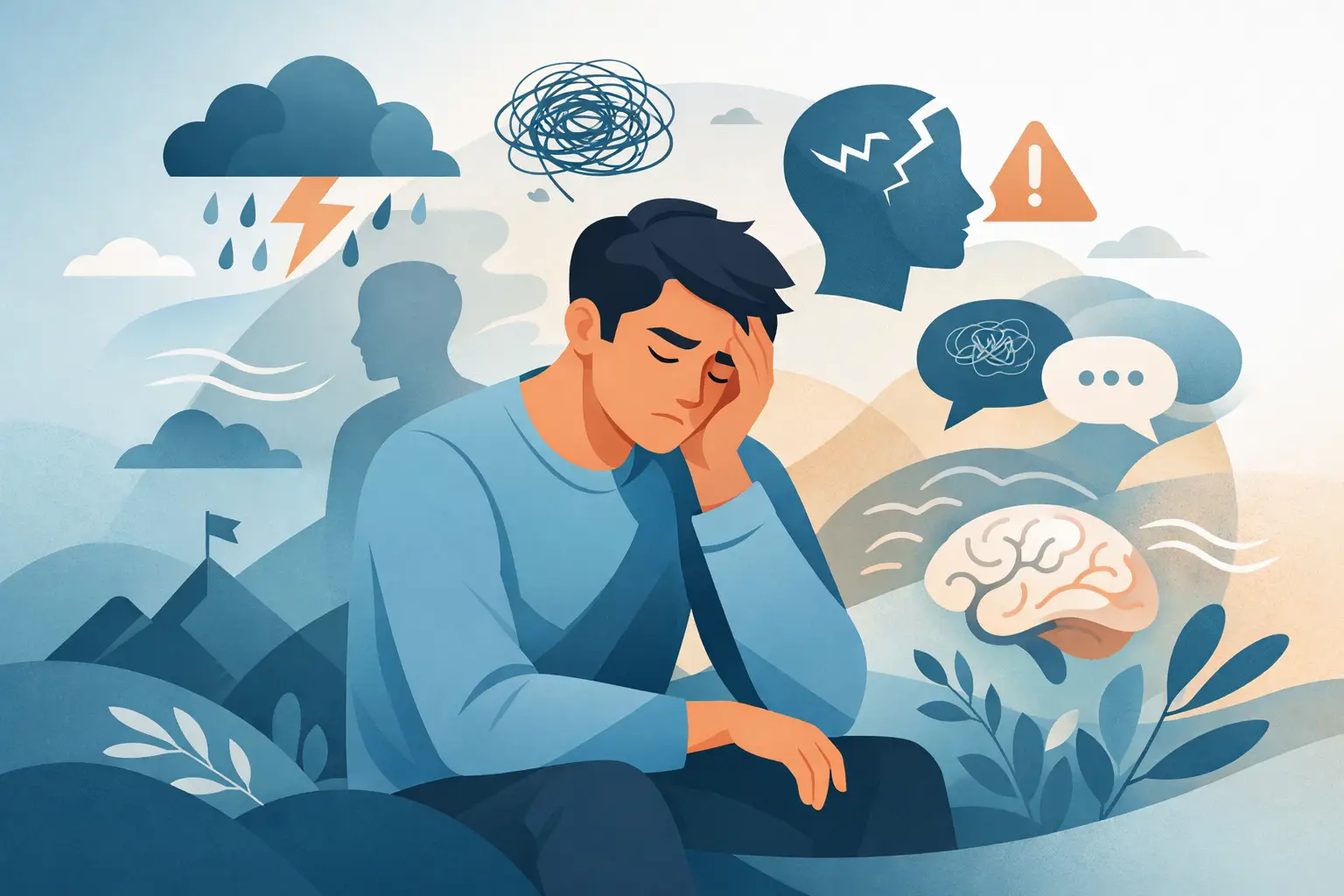
There are people who end their day without any apparent disaster, without bad news, and without any specific problem, yet they go to sleep with heavy chests and on edge. If you're asking yourself, "Why do I feel stressed for no reason?", there's most likely a reason, but it's not yet apparent to your conscious mind.
This question doesn't mean you're weak, it doesn't mean you're exaggerating, and it doesn't mean anything about you is broken. In many cases, this seemingly "unexplained" stress is a smart, internal response from a nervous system that has learned to stay alert, even when there's no immediate danger. The problem isn't with you. The problem is that your body might be living through a story that hasn't been fully understood yet.
Why do I feel stressed for no reason even though my life seems stable?
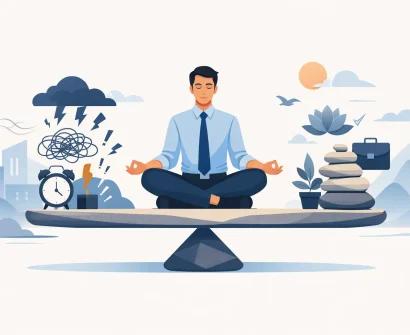
Sometimes, on the outside, your life looks relatively good. You work, you accomplish things, you take responsibility, and people might even see you as strong and composed. But on the inside, it's something else entirely. This discrepancy is very common among high performers, especially those who are used to getting through the day no matter the psychological cost.
External stability doesn't mean internal security. You may have a good income, a family, a routine, and even tangible success, but your nervous system doesn't measure life that way. It asks a different question: Am I truly secure? Can I relax? Is it okay to let go of my state of vigilance?
If your past experiences have been filled with stress, criticism, unpredictability, or emotional turmoil, tension can become an automatic pattern that doesn't need a new daily justification. It's enough that the body has long since learned that relaxation is not safe.
The reason isn't always just psychological.
When we say that stress can have deeper roots, we don't mean it's always a major shock or a single dramatic event. Sometimes the root cause is cumulative: years of suppressing emotions, pleasing others, constant pressure, harsh adjustments, or living in an environment that made you constantly monitor yourself.
The body doesn't easily forget these patterns. It may send signals such as a clenched jaw, chest tightness, racing heart, difficulty sleeping, anxiety upon waking, or a heavy feeling that something bad is going to happen despite the lack of evidence. These aren't illusions. This is the language of a stressed nervous system.
In some cases, physical factors contribute to or exacerbate stress, such as lack of sleep, excessive caffeine intake, hormonal imbalances, chronic fatigue, or deficiencies in certain nutrients. Therefore, a thorough understanding doesn't exclude the medical aspect; rather, it places it in its proper context. Sometimes, the issue has multiple causes, not just one direct one.
How does hidden stress manifest itself in your daily life?
Stress doesn't always come in the form of a single, obvious attack. Sometimes it manifests as a life built on tension. You might find yourself unable to relax without feeling guilty, or constantly preoccupied because pausing opens the door to an anxiety you don't want to confront. You might become sensitive to sound, easily irritated, or constantly anticipating the worst-case scenario.
Some people experience it as a detachment from themselves. Everything is going on, but they aren't fully present. Others feel like they're constantly on their guard, as if their body is tense even in ordinary situations. And some describe it with a very painful phrase: "I don't know what's wrong with me, but I'm not okay.".
This is important because the absence of an obvious reason does not mean the absence of meaning. Rather, it may mean that what is happening is deeper than a mere everyday occurrence, and that it requires a different kind of listening, not further blame.
Why do I feel stressed for no reason, especially when I'm calm?
One of the most perplexing experiences is that stress levels rise when life is quiet, not when it's busy. This is more understandable than you might think. When you're busy, you have something occupying your consciousness. But when the outside world quiets down, the inside begins to surface.
This is why some people feel anxious during vacations, before bedtime, at the end of the week, or after a major accomplishment they thought would bring them peace. Tranquility reveals what was postponed, not what was hidden. And if the body associates stillness with the release of repressed emotions, it may perceive tranquility itself as a threat.
This point changes a lot about how you understand yourself. Instead of saying, "Even when I'm resting, I can't rest, so I'm a hopeless case," you can see the picture more accurately: perhaps your device hasn't yet learned how to receive security.
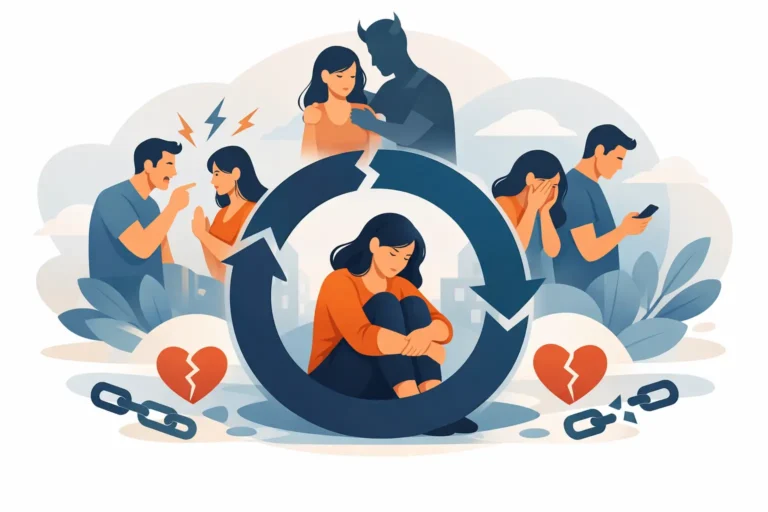
Hidden root – small traumas that are not called trauma
Many people reject the idea that they have a traumatic experience because they compare themselves to more severe cases. But the nervous system doesn't operate on moral comparisons. It is affected by what was beyond your capacity to process at a given time, or by what was repeated until it became a pattern.
You may have grown up in an environment where there was little room for self-expression, where love was conditional on achievement, where mistakes were met with fear or humiliation, or where you were expected to always be the one who held your own. These experiences may not seem dramatic from the outside, but they leave a deep mark on your inner sense of security, belonging, and comfort.
This explains why it's sometimes not enough to simply tell yourself, "Relax, there's nothing to worry about." Because the anxious part of you doesn't operate solely on logic. It resides in a physical and emotional memory that needs regulating, not reprimanding.
What actually helps?
The first step isn't to control it by force, but to stop fighting the signal. When you attack your stress, it often increases. But when you start to see it as a message, something fundamental changes within you. Your awareness shifts from the question, "How do I get rid of it immediately?" to a more honest question, "What is this stress trying to protect me from?"“
This doesn't mean giving in to anxiety, but rather building a more mature relationship with it. It's helpful to start by noticing when stress arises, where it manifests in the body, and what precedes it, even by a few minutes. Sometimes you'll discover that it rises after a specific phone call, when anticipating validation from others, after a moment of emotional closeness, or even after achieving success itself. These small connections open the door to understanding.
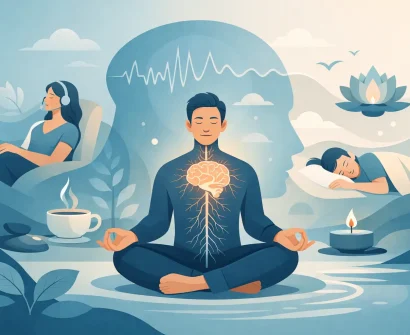
Working with the body, rather than simply analyzing thoughts, is also very beneficial. Some tension cannot be released through words alone. Exercises for regulating the nervous system, paying attention to bodily sensations, regulated breathing, and slowing down the daily rhythm are all helpful tools, but their true value emerges when used within a deeper understanding of the root cause, not merely as quick fixes.
For some people, the most effective approach is specialized professional support in in-depth work with The roots of anxiety and trauma And internal protection patterns. Here the question becomes not just how to calm down, but how to rebuild my inner sense of security and connection with myself.
When is asking for help a wise move?
If stress is frequent, affecting your sleep, relationships, or ability to concentrate, or leaving you feeling constantly drained, seeking help isn't excessive. And if you've tried many general tips without any significant change, the problem might not be your commitment, but rather that the approach itself is superficial compared to what you need.
Trauma-conscious therapy or training can help you understand the layers of what's happening, not just soothe the symptoms. This is especially important for those who are tired of trying to "think positively" or "distract yourself" while their body is still screaming.
In safe spaces built on understanding, compassion, and organization, a person often begins to discover that their anxiety was not an enemy, but rather an outdated protective mechanism in need of updating. This shift in itself alleviates much shame and confusion.
Not every tension needs an immediate explanation.
Sometimes, what exacerbates the suffering is the insistence on understanding everything immediately. Some feelings don't reveal their meaning all at once. They require presence, patience, and a gradual approach. Saying to yourself, "I feel anxious right now, and I don't fully understand it yet, but I'm ready to listen"—this statement is more mature and healing than many attempts at suppression.
In deep healing, we don't begin with the assumption that there's something wrong with you. We begin with the assumption that there's an inner intelligence trying to keep you safe in the way it knows how. And over time, that intelligence can learn a less costly, calmer, and more harmonious way to live your life now.
If you find yourself asking, "Why do I feel stressed for no reason?", perhaps the most important message today is this: Your feelings aren't meaningless, and even what seems vague holds meaning. When you approach stress as a gateway to understanding, not as evidence of guilt, your relationship with yourself begins to shift toward greater security and deeper peace.