


What exactly is conscious trauma recovery?
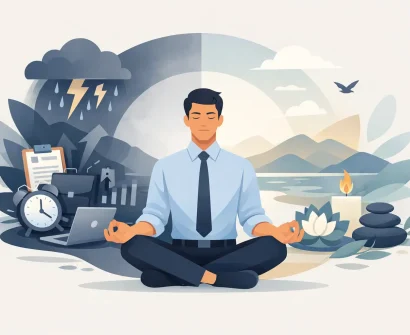
You might be successful in your career, responsible, conscientious, and reasonably self-aware, yet feel like your body is living a different story. You struggle to sleep, get stressed easily, find yourself in draining relationships, or remain trapped in a cycle of relentless inner pressure. This raises a crucial question: What exactly is conscious trauma recovery, and why do so many feel it's closer to what they truly need than general advice or quick fixes?
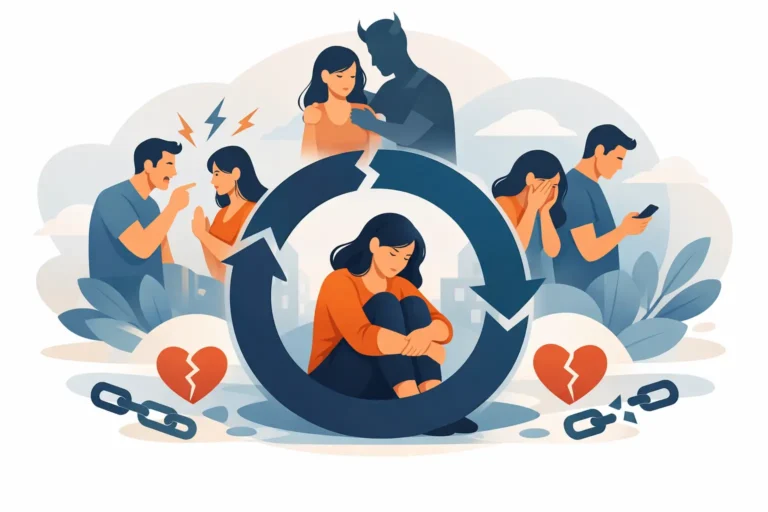
Conscious trauma recovery isn't simply about trying to feel better. It's a completely different way of understanding psychological and physical pain. The core idea is that what today appears as anxiety, avoidance, anger outbursts, excessive pleasing, emotional detachment, or even compulsive achievement may not be a character flaw. It may be a survival response your nervous system learned earlier, which then persisted after the danger had passed.
What is conscious trauma recovery?
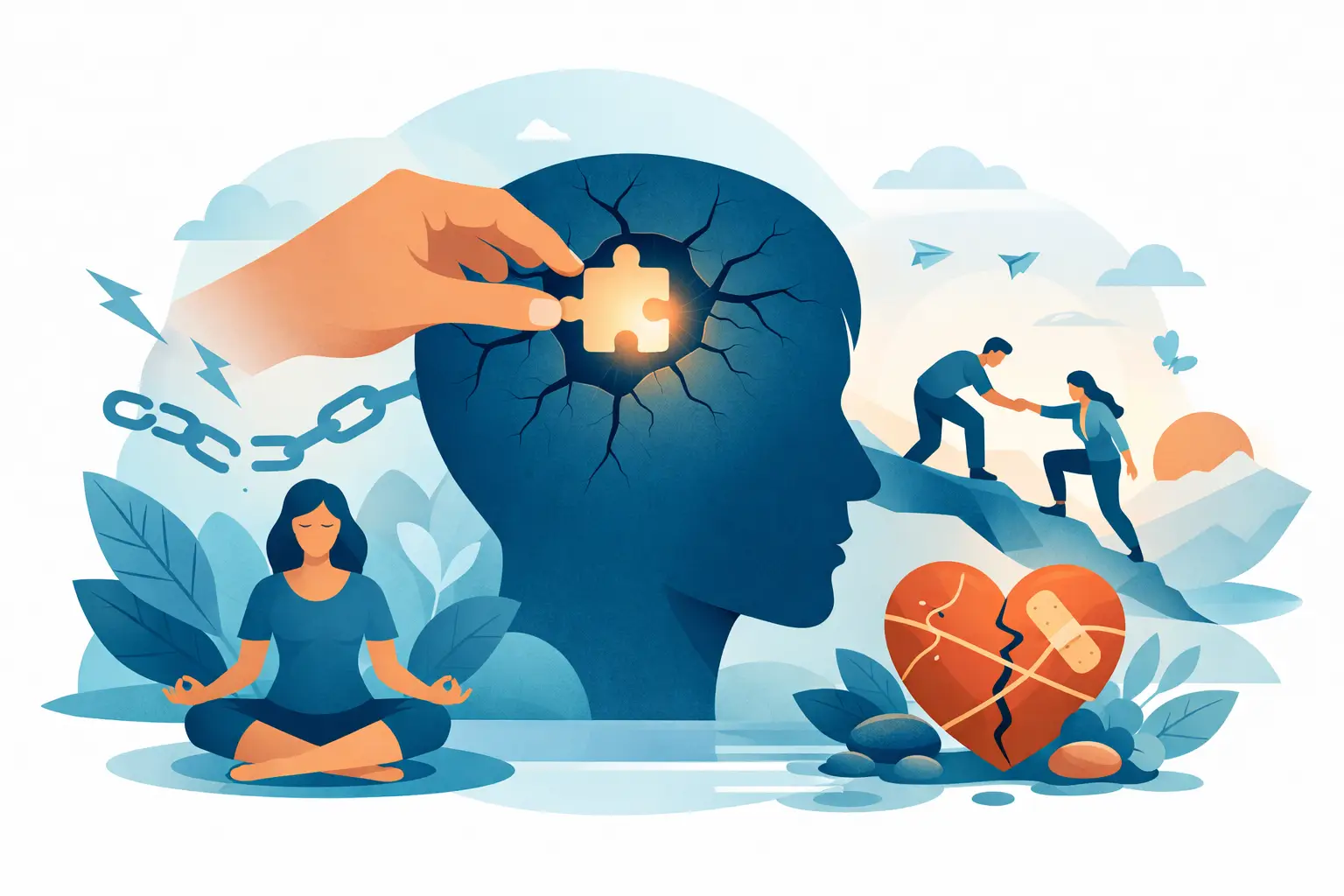
Simply put, conscious trauma recovery is a healing process that views symptoms as messages, not flaws. It's an awareness that goes beyond simply analyzing thoughts; it encompasses the body, emotions, relational patterns, and the history of coping you've created to stay safe. It's a recovery that doesn't pressure you to quickly overcome your pain, but rather helps you build a genuine capacity to remain present with what's happening within you without collapsing or becoming disconnected from yourself.
The word "conscious" is important here. It means that the process isn't about reenacting the pain or dwelling on it, but about observing it with a degree of safety and order. You're not going back to the wound to prove it exists. You're gradually approaching it so that it stops running your life from behind the scenes.
For this reason, this type of recovery does not just focus on the question: What happened to you? But adds a more specific question: How did what happened affect your nervous system, your sense of self, your confidence, your boundaries, and your ability to connect with others?
Why is intellectual understanding alone not enough?
Many people know their story well. They've read, analyzed, and perhaps talked for years about their childhood, relationships, or past traumas. But knowledge alone doesn't always change the automatic response. You may understand that you're not in danger, but your body still reacts as if it is.
Here's the crucial difference. Conscious trauma recovery doesn't treat you like a machine that simply needs mental reprogramming. Instead, it assumes there are deeper layers of memory, contraction, and protection. When your heart races, your voice freezes, or you feel numb, these aren't just negative thoughts. This is the language of your nervous system trying to protect you in the way it knows how.
Therefore, any genuine healing process needs to consider rhythm, safety, and inner order. It needs to teach you how to observe before you interpret, how to feel before you judge, and how to gradually build the capacity to stay with the truth without relapsing into despair.
How does it differ from traditional therapy or mindfulness?
The aim here is not to put one method against another. Sometimes traditional psychotherapy is very appropriate, and sometimes meditative practices are deeply beneficial. But the problem arises when someone with untreated trauma is asked to sit in prolonged silence without any organizing tools, or to repeatedly recount their story without any change in their physical or emotional state.
Conscious trauma recovery differs in that it begins with safety. It doesn't assume that every confrontation is helpful, nor that every insight equals healing. Sometimes slowness is progress. And sometimes learning to notice a clenched jaw, a tightened chest, or the urge to withdraw is more important than any clever analysis.
It also doesn't see defenses as resistance to be broken. If you're running away, laughing when you're hurting, over-controlling, or pleasing everyone else at your own expense, these are often outdated survival strategies. In the trauma-conscious pathway, we don't attack these parts. We understand their function, build a relationship with them, and then help them loosen up when safety becomes possible.
What does this recovery look like in reality?
In everyday life, conscious trauma recovery doesn't initially manifest as pleasant feelings. It often begins with your ability to notice what you've been automatically internalizing. You become aware that you tense your shoulders whenever asked to do something. You notice that you say yes when your body is saying no. You see that your anger isn't the whole problem, but rather a layer on top of an old fear or helplessness.
Then something deeper begins to change. The distance between the trigger and the reaction widens. The symptoms don't disappear immediately, but you're no longer completely captivated by them. You may feel anxious, but you know how to stay grounded. Sadness may surface, but you don't perceive it as a breakdown. Patterns in relationships, work, and identity may be revealed, and you understand that what you called vulnerability was actually the long-standing price of coping.
This is what makes true recovery less flashy and more genuine. It doesn't promise you a perfect version of yourself. It promises you a clearer relationship with yourself, a greater presence, and more freedom of choice instead of living by old reactions.
What does conscious trauma recovery involve?
This path often involves working on multiple levels simultaneously. There's the level of psychological education, because understanding alleviates fear and gives you a language for what you're experiencing. There's the physical level, because trauma isn't just a mental construct. And there's the level of inner feelings, because many people have conflicting voices within them: one part yearns for closeness, another fears it; one part desires comfort, another forbids it.
This is why trauma-aware approaches draw on models like Internal Family Systems for understanding internal structures, TRE® for releasing pent-up tension, NARM® for working with growth and identity traumas, and Compassionate Inquiry for delving beneath behavior to understand pain and meaning. What matters is not the name of the model, but how it works: Does it make you feel safer and more connected? Does it respect the boundaries of your nervous system? Does it help you get to the root of the problem instead of just chasing the symptoms?
On a platform like Montaser Moussa's, the value of this approach becomes apparent when human depth meets clear structure. Because many people don't just need a space to vent; they need someone who understands the complexity, sees the pattern, and knows how to slow down the process without leaving it unclear.
Who is this course suitable for?
This is suitable for those who feel they've put in a lot of effort in self-development but still haven't made any progress. It's suitable for those experiencing chronic anxiety, hypervigilance, a sense of threat without a clear cause, or a disconnection from their body and emotions. It's also suitable for high achievers who appear composed on the outside but are experiencing silent internal depletion.
But it's not a one-size-fits-all approach. Some people need basic stability before any in-depth work can begin. Others benefit from a combination of psychotherapy and trauma-aware support. And there are cases that require specialized clinical follow-up, especially when symptoms are severe or daily life is significantly impacted. The key here is understanding that healing isn't a competition between schools of thought, but rather a nuanced response to what the individual truly needs.
How do you know you're moving in the right direction?
The goal isn't to become completely unbothered. A more accurate goal is for the past to have less of a hold on your present; for you to be able to observe what's happening without being swept away by the current; for you to become more comfortable with your limitations; for your inner shame to lessen; for telling the truth to become easier, for comfort to be less threatening, and for introspection to be less unsettling.
You might also discover that progress isn't linear. There are days when you feel clear, then an old wave returns. This doesn't mean you're back to square one. Often, it means your nervous system is ready to touch a deeper layer that was previously closed off. The important thing is not to interpret every regression as failure. Sometimes it's part of reorganization.
What does conscious trauma recovery not mean?
It doesn't mean justifying every hurtful act in the name of the wound. It doesn't mean remaining trapped in your victimhood. It doesn't mean being prisoners of the past, endlessly searching for a reason for everything. The healthy path acknowledges the pain, but it doesn't build a home within it. It restores your ability to choose, to take responsibility, and to live from a more connected and authentic place.
Nor does every discomfort constitute a shock. Sometimes we experience normal life stressors that require support, boundaries, and comfort, not profound dismantling. Mature awareness distinguishes between what needs simple containment and what requires radical and deliberate action.
If there's one thing worth remembering, it's this: what you're feeling isn't proof that you're broken. Much of what you're experiencing may be an old survival intelligence that's no longer relevant to your current life. And when that intelligence is met with understanding, organization, and compassion, your body, mind, and heart begin to learn a new truth—that you don't have to spend the rest of your life just surviving.