



TRE Trauma Release Exercises: Are they right for you?
Some people never seem to break down on the outside. They go to work, they get things done, they smile, and they carry on with their day as if nothing is wrong. But the body knows the truth. Tight jaw, frequent insomnia, chest tightness, hypervigilance, or a constant feeling that you can't relax even when there's no real danger. This is where many people become interested in Trauma Release Exercises (TRE) – not because they want a new technique, but because they're tired of carrying stress in their bodies every day.
What are Trauma Release Exercises (TRE)?
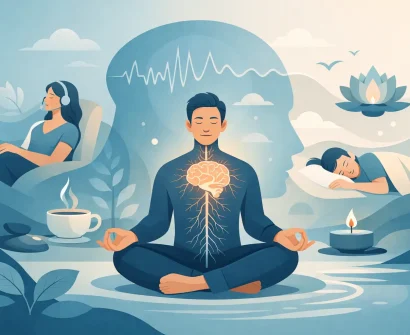
Trauma release exercises (TRE) are a series of physical exercises designed to help activate the body's natural twitching reflexes. These twitches are not a sign of something wrong, but rather an innate response that the nervous system may use to release accumulated tension after stress, trauma, or prolonged alertness.
The basic idea here is both simple and profound. When a person goes through a stressful, threatening, or prolonged experience, it's not just the mind that deals with it. The body also enters a state of readiness, tension, inhibition, or even freeze. Sometimes the experience ends, but the response remains. You find yourself living on the edge internally, even if your life appears stable externally.
TRE doesn't rely on intellectual analysis first. It doesn't ask you to explain everything, remember everything, or find the right words for a past that may be heavy and complex. It approaches a different point: What if part of the burden is still stuck in the body?
How does TRE work at the level of the nervous system?
When the nervous system is under constant stress, tension becomes a common occurrence. You don't necessarily have to feel overtly afraid, but you might feel uneasy. Some people live in a state of hypervigilance, some in a state of numbness and lethargy, and some fluctuate between the two.
TRE exercises prepare the body in a specific way to induce involuntary twitching, often starting in the legs or pelvis and progressing to varying degrees. This process may help the body transition from chronic inhibition to a state of release and regulation. This is why some people experience a feeling of lightness, warmth, deeper breathing, or a tranquility they haven't felt in a long time afterward.
But here's a very important point: the trembling itself is not the goal. The goal is regulation, not excitement. The aim is not to push your body to its maximum possible reaction, but to learn how to listen to it, and how to allow it to move without drowning or becoming detached.
Why are high-performing people attracted to it?
Many people who appear strong on the outside have learned to live top-down: thinking, planning, controlling, analyzing, and achieving. These abilities are useful, but sometimes they become a way to escape inner feelings. Not because the person is weak, but because they've learned that security comes from control.
This is why Trauma Release Exercises (TREs) may appeal to those who feel they "understand themselves" theoretically but remain emotionally trapped. Perhaps you've read extensively about trauma, attended sessions, and become aware of your patterns, yet your body remains tense, your sleep is disrupted, and your relationships are affected by your tendency to quickly defend or withdraw. In these cases, working with the body may unlock a door that intellectual knowledge alone cannot.
However, not everyone is ready for it at any given time. This is not a failure. This is respect for the current mental state.
When might TRE be useful?
TRE may be helpful if you experience chronic tension, physical anxiety, difficulty relaxing, frequent muscle tension, or a feeling that your body is constantly working, even at rest. It may also be helpful for those who feel detached from their bodies and want to gradually reconnect in a structured way.
Some people notice a positive effect if they have accumulated work-related stress, prolonged burnout, or a history of difficult experiences that haven't fully processed. Others benefit from it because it gives them a tangible access to a sense of inner security, rather than simply understanding the problem intellectually.
But the benefit depends on two crucial factors: gradual progression and the ability to stay within your tolerance window. If you tend to succumb quickly to emotions, detachment, or panic, you'll need to pay closer attention and perhaps seek professional guidance.
When is a good start not appropriate?
Not everything that is therapeutic is appropriate at every stage. If you are experiencing severe emotional instability, very intense panic attacks, strong intrusive memories, or a clear tendency toward disintegration, self-practice may not be the best option to start with. Similarly, if you have a history of traumatic experiences with your body, you may first need to build coping mechanisms and establish a framework before engaging in any activity that triggers deep-seated responses.
This doesn't mean TRE is off-limits for you. It simply means that timing and technique make a big difference. Some people first need to learn to calm down, recognize boundaries, find stability, and return to the present moment. Then the practice becomes more helpful and less overwhelming.
Healing is not a race. Sometimes the slowest step is the smartest step.
What might you feel during TRE trauma release exercises?
The experience varies from person to person. You might feel a slight tremor in your legs, a movement in your pelvis, deeper breathing, yawning, tears without a clear reason, or relaxation after a long period of tension. You might not feel much at first, and that's also normal.
Some people expect a dramatic experience, then assume nothing has happened if the response is calm. In reality, a well-regulated nervous system doesn't always need a dramatic event to be activated. Sometimes, the real change is simple: better sleep, a less intense reaction, a greater ability to be yourself, or a newfound sense that your body isn't your enemy.
Conversely, unexpected feelings may arise. This is where awareness becomes crucial. If you begin to feel over-eagerness, confusion, fear, or a loss of composure, this is a signal to stop and calm down, not to push further.
The difference between emptying and organizing
This is a point where many people get it wrong. Not all venting is healing. A lot of energy or emotions may be released, but if it happens without sufficient containment, it may leave you more disturbed, not more balanced.
Regulation means that your body can move between activation and rest without getting stuck. It means increasing your capacity for sensation without collapsing, and resting without freezing. That's why mature practice doesn't just ask: Did the body vibrate? It asks: Did you feel safer? Did you become more present? Did you become more connected to yourself and others?
This understanding is crucial for those seeking a genuine cure, not just a temporary thrill. The body doesn't need its defenses violently broken down; it needs its trust earned.
Can TRE be practiced alone?
In some cases, yes, but it's not always wise to start alone. If you're relatively stable, able to recognize your limits, and able to stop when necessary, you may benefit from gradual training. However, if you have a history of complex trauma, strong symptoms, or difficulty distinguishing between activation and regulation, having a practitioner knowledgeable about trauma can make a significant difference.
Professional support doesn't mean dependency. It means learning your body language more confidently. Many people have been hard on themselves for years. When they enter physical activity, they approach it with the same mindset: faster, deeper, more. But recovery doesn't respond to this logic. It requires listening, not forcing it.
In trauma-aware therapeutic spaces, TRE is not treated as an isolated exercise, but as part of a broader process that includes stabilization, physical tracking, resource building, and understanding what emerges after the session, not just during it. This often determines the quality of the long-term outcome.
What makes the experience safe and beneficial?
Safety here isn't just a slogan; it's the foundation of the entire process. A safe workout means entering the exercise session knowing you have the right to stop, the right to slow down, and the right not to continue if your body tells you no. It also means not interpreting every response as progress, nor every pause as resistance.
A calm environment is important, but even more important is your inner attitude. Are you in a state of curiosity and compassion? Or are you testing yourself and trying to force yourself to "heal"? Much of the healing process begins when you stop treating your body as a problem to be fixed and start treating it as a part of yourself that is trying to protect you with what it knows.
If you're looking for true depth, TRE alone is often not the whole way. It might be a powerful entry point, or part of a broader system that includes pattern awareness, working with your inner self, and rebuilding a sense of security and connection with yourself. This is what makes it more authentic and realistic. There's no single technique that solves everything, but there are honest tools that can help you move in the right direction.
In a space like the one Montaser Moussa offers, these tools are approached from a deeper perspective than simply relieving stress. The goal is not just to feel better quickly, but to honestly return to yourself, to understand what was controlling you from within, and how your body finally begins to believe that the danger has passed.
If you feel your body is bearing something that words can no longer explain, don't mistake it for weakness. It might be the true door waiting for you to approach it gently, not forcefully.